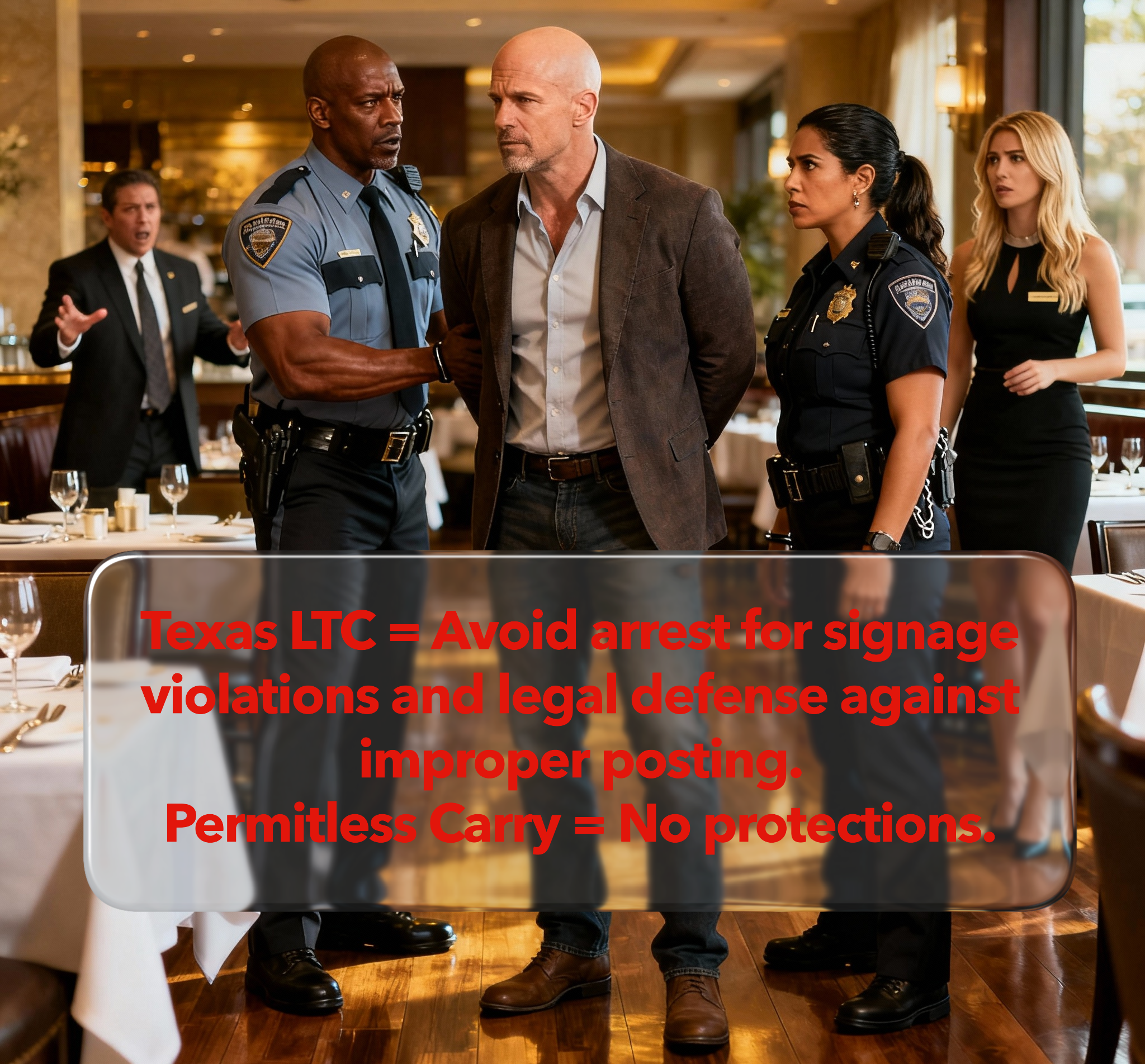
⚠️IMPORTANT: This post is for general educational purposes only. It is not legal advice and does not create an attorney-client relationship. Texas carry laws are complex and change. Consult a licensed Texas attorney for questions about your specific situation.
Permitless Carry in Texas allows lawful adults to carry without getting a license first. That part is convenient. The part people skip is everything that comes after. Skipping the license step does not remove the responsibility that comes with carrying a gun. Permitless carry still has rules, places you cannot carry, and eligibility requirements. It also does not give you a card, a certificate, or any paper trail that says you trained, qualified, and passed the background check dance with DPS. That matters when you get stopped, when you cross state lines, and when you are staring at a sign wondering whether it is a real problem or just decorative metal.
What a Texas LTC Adds: A Texas License to Carry is more than a wallet card and more than a receipt for a class you once took on a Saturday. It shows you did more than wing it and hope for the best. You completed state-approved training, passed your proficiency qualification, and went through the DPS application process. The LTC travels. Permitless carry does not magically become a passport the moment you cross the border. That matters if you leave the state and do not want to become a temporary legal scholar every time you fill up the truck.
Understanding Texas Carry Signs: 30.05, 30.06, 30.07, 51%, and the One That Means Nothing: This is where most carriers, including experienced ones, have gaps. Texas law recognizes several specific signs, and they do not apply to everyone the same way. Getting them confused is not a minor inconvenience. It is the difference between a legal carry decision and possible legal trouble.
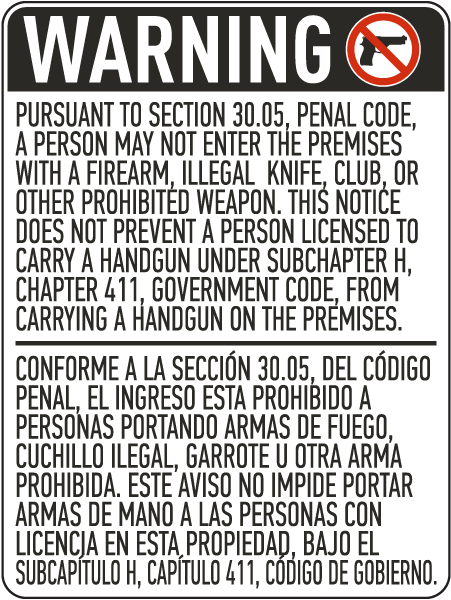
- 30.05 (Restricts Permitless Carriers Only): A 30.05 sign tells unlicensed carriers they cannot enter with a firearm. If a business posts only a 30.05 sign, Texas LTC holders are not restricted by it. The sign was created specifically by HB 1927 in 2021 to give property owners a tool to exclude unlicensed carry without affecting LTC holders. If you have your LTC and the business only has a 30.05 sign, you have a carry option that a permitless carrier does not. Violating a 30.05 sign as a permitless carrier is a Class C misdemeanor (a fine of up to $200) unless oral notice was given to leave, which escalates it significantly.
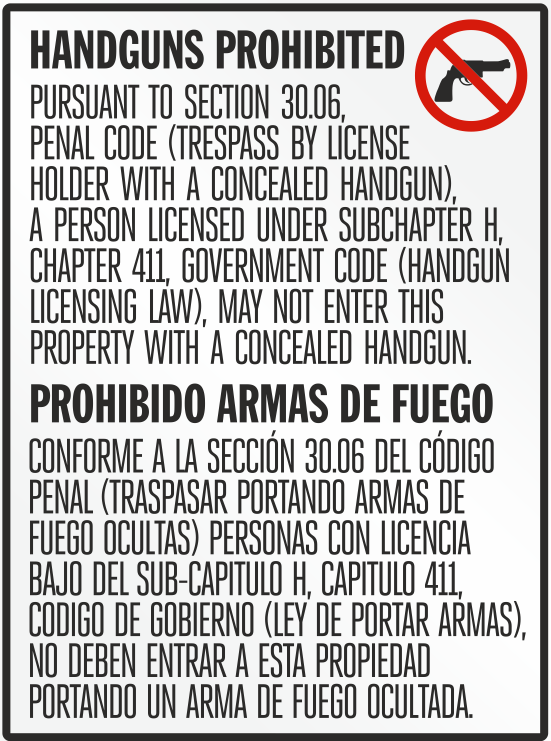
- 30.06 (Restricts LTC Concealed Carry): A 30.06 sign restricts LTC holders from carrying concealed on that property. Permitless carriers are not affected by a 30.06 sign posted alone. That is the flip side of the 30.05 advantage. Signs cut both ways depending on how you carry and what credential you hold.
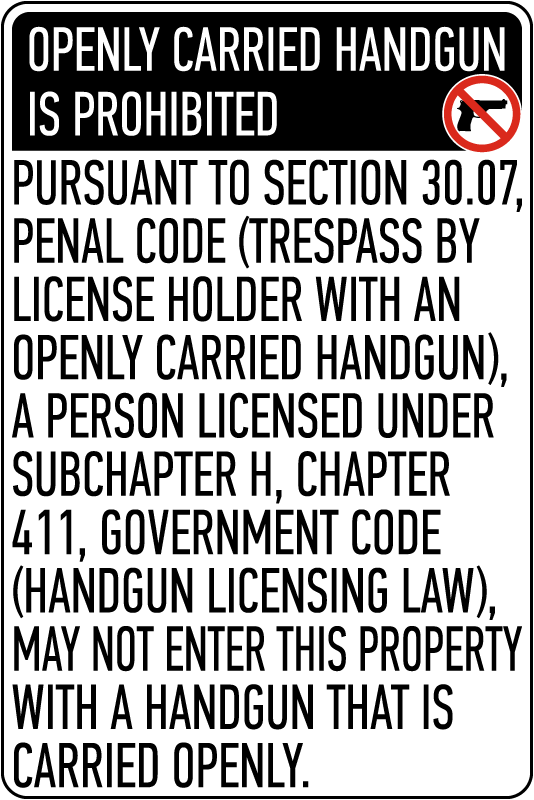
- 30.07 (Restricts LTC Open Carry): A 30.07 sign restricts LTC holders from open carrying on that property. Again, permitless carriers are not specifically named by this sign. If a business posts both 30.06 and 30.07, LTC holders are restricted from both concealed and open carry on those premises.

- The Red 51% Sign (Restricts Everyone … This One Is a Felony): The 51% sign is in a different category from every other sign on this list and it is the one most carriers underestimate. A business required to post the red 51% sign is licensed to sell alcohol for on-premises consumption and derives 51% or more of its gross receipts from alcohol sales. The Texas Alcoholic Beverage Commission requires these businesses to post the sign conspicuously.
- Here is the critical difference: the 51% sign applies to both LTC holders and permitless carriers. Neither credential gives you a pass. Carrying a handgun into a posted 51% business is a third-degree felony under Texas Penal Code § 46.035 for LTC holders and § 46.03 for all other carriers. This is not a trespass issue. It’s not a misdemeanor. It’s a felony.
- One practical warning: the law requires the sign to be conspicuously placed, but you will occasionally find these signs posted on interior walls, behind the bar, or in locations that are easy to miss before you walk in. That is your responsibility to catch, not theirs to make obvious. When in doubt about a bar, restaurant, or venue that sells alcohol look for the sign before you carry in.

- The Generic “No Guns” Sign (Legally Unenforceable in Texas): You have seen this sign. It is the universal red circle with a handgun silhouette and a slash through it. It is on grocery store doors, gas stations, and restaurant entrances across Texas. It’s decorative and unenforceable.
The generic no-guns symbol does not meet the statutory requirements of any Texas carry restriction. It is not a 30.05 sign. It is not a 30.06. It is not a 30.07. It has no statute behind it, no prescribed language, and no legal weight. Both LTC holders and permitless carriers may legally disregard it unless the location is independently prohibited under Texas Penal Code § 46.03 or another statute.
This does not mean you should walk past one without thinking. You have rights but always respect property owner’s rights. A property owner can still verbally ask you to leave and refusing that verbal notice is where it becomes a criminal trespass issue regardless of signage. But the sign itself (the red circle and slash) will not result in a criminal charge for carry in Texas. Know which signs have teeth and which ones are decorative. In Texas, the difference is spelled out in statute and your LTC training covers all of it.
Reciprocity (Where Your LTC Travels): Permitless carry is a Texas solution. The moment you cross into another state, it stays home. Other states have their own laws, their own definitions of who can carry, and zero obligation to recognize Texas permitless carry. Your Texas LTC is different. As of April 2026, your Texas LTC is recognized in 35 states (State Reciprocity Information | Department of Public Safety). That covers a significant portion of the country. This includes the Southeast, much of the Midwest, and the South.
States that recognize Texas LTC: Alabama, Alaska, Arizona, Arkansas, Colorado, Delaware, Florida, Georgia, Idaho, Indiana, Iowa, Kansas, Kentucky, Louisiana, Michigan, Minnesota, Mississippi, Missouri, Montana, Nebraska, Nevada, New Mexico, North Carolina, North Dakota, Ohio, Oklahoma, Pennsylvania, South Carolina, South Dakota, Tennessee, Utah, Virginia, West Virginia, Wisconsin, and Wyoming.
If you road trip and carry your LTC gives you a documented, recognized credential that works across state lines. Permitless carry does not do that. Your Texas LTC does.
Before you travel: Always familiarize yourself with Federal Law (Interstate Travel). Always verify current reciprocity status for your travel through and destination state directly with that state’s authority. Agreements change, and carrying on outdated information creates real legal exposure.
What Happens at a Traffic Stop? You get stopped. Officer walks up. Asks for your ID. If you are an LTC holder, Texas Government Code Section 411.205 requires you to present your LTC alongside your driver’s license when a peace officer requests identification. That is not optional and it is not a courtesy. It is the law. When you hand that card over, it tells a story before you say a word. It says you completed state-approved training. It says you passed a range proficiency qualification. It says you went through the DPS application process. That is documented credibility in a moment that can feel tense even when you have done nothing wrong. Permitless carriers are not required to inform unless directly asked about weapons. And if asked, there is no documentation of training, qualification, or eligibility to present. There is nothing legally wrong with that, but the LTC gives you something the permitless carrier simply does not have in that moment.
Convenience vs. Proof: Permitless carry is convenient. The LTC is proof. That is the easiest way to think about it. Permitless carry gets you started. The LTC shows you trained, qualified, and took the process seriously. If you only carry occasionally and never leave Texas, permitless carry may fit your life just fine. If you carry regularly, want more confidence, or travel, the LTC gives you more flexibility and a lot more peace of mind.
Why the LTC Still Matters:
- Proof of training
- More confidence in your carry knowledge
- Reciprocity outside Texas
- Better understanding of signs, restrictions, and carry boundaries
- A more professional approach to concealed carry
That last point matters. A good LTC course is not just paperwork with range time attached. It helps you understand the law, the limits, and the responsibilities that come with carrying a handgun.
Training Is the Part People Skip: A lot of new carriers focus on the firearm and stop there. The gun gets all the attention. The holster gets an afterthought. The clothing gets whatever was clean. And the legal side gets a quick, “I’ll figure it out later.” That is usually backwards. The gun is only one piece of the puzzle. Holster choice, clothing, concealment, legal knowledge, and situational awareness do the heavy lifting around it. LTC training helps tie those pieces together so you are not improvising with something that deserves more than improvisation.
Common Misunderstandings: One of the biggest myths is that permitless carry means the law stopped existing. It does not. Texas still has laws about where you can carry, how you can carry, and what signs mean. Another myth is that the LTC is outdated now. Also not true. Permitless carry may be the easiest way to start. The LTC is what you get when you want more than the minimum. People also get caught up in tactical cosplay. They dress like they are about to escort a dignitary through Fallujah, but they never actually train. Carrying with normal clothing and a practical mindset beats high-speed low-drag theater every time. If you can hide your carry life in plain sight, that is usually more effective than broadcasting it with 5.11 shirts and a vest you do not actually understand.
Frequently Asked Questions:
- Does Texas LTC still matter now that permitless carry exists? Yes. The LTC provides documented training, reciprocity in approximately 37 states, advantages at traffic stops under Texas Government Code § 411.205, and carry access in locations where only a 30.05 sign is posted.
- Can an 18-year-old get a Texas LTC? Following a 2022 federal court ruling, DPS will no longer deny LTC applications solely because an applicant is between 18 and 20 years old. Eligible young adults in that age range have a pathway to their LTC that permitless carry does not provide under current law.
- What is the difference between a 30.05 and 30.06 sign? A 30.05 sign restricts permitless carriers only. A 30.06 sign restricts LTC holders from concealed carry. They are not the same sign and they do not apply to the same people.
- Do I have to tell police I am carrying in Texas? LTC holders must present their LTC when a peace officer asks for their ID, under Texas Government Code § 411.205. Permitless carriers are not required to disclose unless directly asked about weapons.
- Which states recognize my Texas LTC? As of April 2026, the 35 states listed above recognize the Texas LTC. Always verify current reciprocity with the destination state before you travel.
- Which One Fits You? If you want the shortest path to legal carry in Texas, permitless carry may fit your lifestyle just fine. If you want more structure, more documentation, more travel flexibility, and more confidence, the Texas LTC is the better choice. For most carriers, it is not really either-or. Permitless carry is the baseline. The LTC is the upgrade.
Get Trained the Right Way: At Advanced Triggernometry, we believe responsible carry starts with good information and practical training. Our Texas LTC course is built to help you understand the law, complete the classroom portion, and move through the process with confidence. We recommend the online course because most people have jobs, kids, schedules, and exactly zero interest in adding one more drive across town. When you are ready for range proficiency, reach out and we will help you finish the next step.
Get started now at the link below. Click “enroll now”. The page will open to the Texas Carry Academy enrollment portal.
⚠️IMPORTANT: Educational Disclaimer. This post presents research on concealed carry and crime for informational purposes only. It is not legal advice. Consult a licensed Texas attorney for legal questions. All claims are cited in full sources. See references below for independent verification of research and Texas DPS data.
Important links: